Posts

Understanding AI Engineering: Data, Infrastructure, and Best Practices

Understanding AI Engineering Understanding AI Engineering: Data, Infrastructure, and Best Practices Artificial Intelligence is a vast world—and so is the ecosystem that supports it behind the scenes. AI Engineering itself is a broad discipline with many perspectives, but in this article, I want to focus on three foundational aspects: The primary requirement for AI systems to work: data High-level infrastructure options that support AI Some practical best practices observed in enterprise environments Today, AI has become an integral part of our day-to-day operations. From conversational models to productivity assistants, we interact with AI through tools and platforms such as GPT-based systems, Copilots, Gemini, and many others. While using these tools, a natural question arises: ...

Personalization vs. Customization in Oracle Fusion — A Practitioner’s Perspective

Over the years of working across Oracle EBS, Fusion Applications, and Oracle Cloud PaaS, one of the most common (and often misunderstood) discussions I ve had with clients revolves around a simple question:  " Should we personalize or customize our Oracle Fusion environment?" This question might sound minor, but it often defines the long-term stability, scalability, and upgrade-readiness of your entire Oracle landscape. Let s dive deep into understanding what these terms actually mean not just from a documentation standpoint, but from an implementation practitioner s lens.  Personalization - "Tuning the App for Better Usability" What It Really Means ? Personalization refers to the kind of changes end users or functional administrators can do to make the system more intuitive for themselves without writing code or deploying anything externally. Think of it as adjusting your workspace rather than rebuilding the office.  Common Examples  Hiding or showing fields on a ...

The Rising Age of Data Analysis: From Insight to Intelligence

Image
Over the past decade, data has evolved from being a byproduct of digital operations to becoming the very foundation of decision-making. What was once a practice of “looking back” to understand performance has now become a strategic discipline that shapes what comes next. We’re living in the rising age of data analysis , and the shift isn’t just technological—it’s cultural, organizational, and deeply transformative. The Changing Landscape: From Reports to Real-Time Intelligence Not long ago, organizations relied on static reports and dashboards to make quarterly decisions. Today, data analysis is happening in real-time, embedded in every workflow, product, and service. The velocity, variety, and volume of data have exploded, and so have the expectations from business leaders. This shift is visible in the Gartner Magic Quadrant for Analytics and Business Intelligence Platforms , where we’ve seen a steady migration of players toward AI-infused solutions. Platforms like Microsoft Power...

Jira Issue Workflow Configuration

Image
Jira Workflow : A Jira workflow is a set of statuses, transitions & triggers that an issue moves through during its lifecycle, and typically represents a process within your organization. Workflows can be associated with particular projects and, optionally, specific issue types by using a workflow scheme. Workflow can be defined for Story, Task, Bug, Sub-task & epic seperaltely or as a common based on subscription model opted by a user/organization. It is also referred as "issue workflows" in Jira. Atlassian articel can referred here . In order to configure a workflow user should first be aware of configured Jira process i.e. is it a company managed or team managed project setting in Jira while initial configuration was done. Note : Project once configured cannot be modified/migrated from team manager to company manager and vice-versa. Below is the pictorial representation of how a user can identify if the project is company manager or team managed. Detaile...

Customizations: Oracle SaaS vs PaaS

Image
  It has always been a questions from customer, on what's the customization extent of SaaS and where one should approach PaaS services in Oracle universe. After working into this domain for 3+ years and having multiple iterations into multiple projects and tons of pre-sales in past few years this has brought me a good level of clarity to the extent where customers are happy to know the point when they should switch to PaaS. Understanding and practicing industry best practice should always be best practice for an organization as that helps to manage that for long run. As best systems are those which requires minimal of manual efforts to maintain. SaaS Customizations Page composer OTBI reports Custom Workflow - BPM Page Composer: For certain applications one can use Page Composer to configure application page components, such as page content and layout for other users.Here are the changes one can make using this tool: Add, move, delete, show, and hide fields ...

Scrum, Art & The Analyst

Image
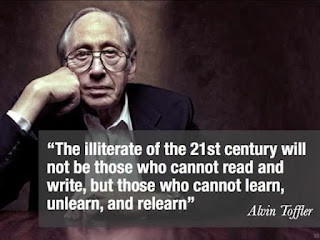
As the title says it's not just about analysis or scrum but it also has art in it. I been thinking to write on this topic for pretty long time, but as the saying goes "There's a right time to do the right thing" and nothing suits better then the time where am elevating a step in my career. In my experience of working into multiple hats as Scrum master, Business Analayst, Consultant, Customer success and most importantly a project advisor, I have learned a cocept practice in scrum as well as art a very hard way. i.e. Learn, Unlearn and relearn, the concept states you learn a skill with time that evolves in market so you have to step back un-learn the concept but hold onto logic and re-learn the latest evolution in market. Art goes the same way as no art is same, you can copy a art but it cannot be exact similar to the original one, so says the artist. So, as an analyst i have evolved from .Net, Java to Oracle solutions in my career and I still keep learning my way...

Adapting a Agile way of life.

There a quote by an anonymous author, "A frog in a well cannot discuss the ocean, because he is limited by the size of his well". We all are driven by our psychological mindset. And our psychological mindset is a collection of our observations during our upbringing, this is one of the reasons why everyone behaves differently. But have you ever thought we as a human have an ability to change our mindset just by changing our perspective to things and learning new methods to achieve peace and goals in life. Similarly, is the project and it's team members everyone has their own way's and methods of doing the task and we can never have everyone on same page from day one. So a Scrum master, Project Manager, Business Analyst role being a change managers is to drive this behavioral challenges and keep the team streamlines to project goals and to resolve any disputes amongst the team not by escalating it but just by observation and by driving them to anew direction of mi...

Design Thinking:

Image
This has been a pressing topic for any Business Analys / Project Manager while prototyping or while advising a solution design. Design thinking is about being into customer shoes and trying to identify if the applied approach is feasible or logical in nature for en customer to use it. Also, principels of desing thinking helps to review and desing the solution is a better way which can indirectly increase acceptance ratio. According to human psychology a good design is not glamorous, it's more of easy to use for the user. Desing thinking is more over a lean process. steps to be followed for design thinking are as below: Understand/Empathize Define Ideate Prototype Refine/Test Understand: During this phase being a client advisor individual should try to understand the pain points of current system/process. Individual should build empathy for the user while performing this phase. Techniques which can be used are; Understand the audience: Try to understand the stakeh...

Certifications and it's details

IIBA enlisted certifiactions a BA can go for with 5+ years of experience IIBA Fees (International Institute of Business Analysis) Membership: US$55/year - 3887.20 CBAP® (Certified Business Analysis Professional) - $450 - 31804.33 Application fee: $125 - 8834.54 Exam Fee: $325 - 22969.80 Prerequisites: Complete a minimum of 7,500 hours of Business Analysis Work experience in the last 10 years. Within this experience, a minimum of 900 hours completed in 4 of the 6 BABOK® Guide Knowledge Areas, for a total of at least 3,600 of the required 7,500 total. Complete a minimum of 35 hours of Professional Development in the last 4 years. Provide two references. The CBAP exam consists of 120 multiple choice questions and must be completed within 3.5 hours. Formulated from the BABOK® Guide, exam questions are both scenario and case study-based. This is a computer-based exam taken at a Prometric test center. To be admitted to the exam, your IIBA Profile Name must match your governm...

WBS - Work Breakdown Structure

Image
We have known multiple documents and plans used during project management like scope creep method, product backlog, charts, BRD, FRS and SDD. But to keep a track of project and deliverables we need is a tracker. WBS i.e. Work Breakdown Structure provides a detailed breakdown of tasks, resource requiredness and effort estimation. Depending upon organization how one prepares it i.e. tool used can differ. Commonly used tools are Ms Excel, Smartsheet & Google sheets. With reference to workbreakdownstructure A work breakdown structure (WBS) is a key project deliverable that organizes the team's work into manageable sections. The Project Management Body of Knowledge (PMBOK) defines the work breakdown structure as a "deliverable oriented hierarchical decomposition of the work to be executed by the project team." Dividing complex projects to simpler and manageable tasks is the process identified as Work Breakdown Structure (WBS). Usually, the project managers use this m...

Kanban !

Image
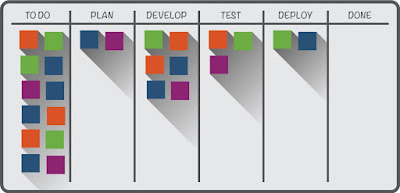
What is Kanban? Kanban is an Agile way of development just like Scrum being one. The main idea behind the Kanban system is to deliver what the process needs exactly when it needs it .The goal of Kanban is to identify potential bottlenecks in your process and fix them so work can flow through it cost-effectively at an optimal speed or throughput. The mantra is “Fail fast! Fail often!” As stated on Wikipedia Kanban(signboard or billboard in Japanese) is a scheduling system for lean manufacturing and just-in-time manufacturing (JIT). Taiichi Ohno, an industrial engineer at Toyota, developed kanban to improve manufacturing efficiency. Kanban is one method to achieve JIT. While kanban was introduced by Taiichi Ohno in the manufacturing industry, it is David J. Anderson who was the first to apply the concept to IT, Software development and knowledge work in general in the year 2004. The four foundational principles and six Core Practices of the Kanban Methodology are provided below:...

BurnDown vs BurnUp chart - Scrum

Image
Q. What is Scrum ? A: Scrum is an Agile approach of software development where software development is released in iterations (Incremental approach) and at the end complete product is delivered where customer needs are met unlike traditional waterfall approach where requirements can't be updated / modified during development cycle. There are various methods to track project status. Scrum uses BurnDown and BurnUp charts to track progress and demonstrate change using graphs.This helps in project forecasting as well. BurnDown Chart: A burn down chart is a graphical representation of work left to do versus time. The outstanding work (or backlog) is often on the vertical axis, with time along the horizontal. That is, it is a run chart of outstanding work. It is useful for predicting when all of the work will be completed. Progress on a Scrum project can be tracked by means of a release burndown chart. The ScrumMaster should update the release burndown chart at the end of each s...

Product Backlog VS Sprint Backlog

What is Product Backlog ? Product Backlog is a collection of list of items to be developed i.e. It is the list of functional and non-functional requirements ordered based upon the priority of requirement. In other words Product Backlog is simply a list of all things that needs to be done within the project. It replaces the traditional requirements specification artifacts. These items can have a technical nature or can be user-centric e.g. in the form of user stories. As per SCRUM, The Product Owner is responsible for the Product Backlog, including its content, availability, and ordering. A Product Backlog is never complete. The earliest development of it lays out the initially known and best-understood requirements. The Product Backlog evolves as the product and the environment in which it will be used evolves. The Product Backlog is dynamic; it constantly changes to identify what the product needs to be appropriate, competitive, and useful. If a product exists, its Product Backlog...

Fail Fast !

Image
Title might confuse a bit but it's not a motivational article. It's based on Agile's Scrum approach. Lets first under what is Agile and why? What is Agile? Agile is a framework used more over in IT organization for Project Management and software development approach. As per Scrum Alliance an Scrum body it defines Agile as, "Agile is a mindset, a way of work that allows product creators to easily adjust to stakeholder and user needs.". It is based on principles stated below, Individuals and interactions over processes and tools Working software over comprehensive documentation Customer collaboration over contract negotiation Responding to change over following a plan This is Agile Manifesto. which describes, while there is value in the items on the right, we value the items on the left more. As per Agile Manifesto it has 12 principles which an agile software approach should follow i.e., Our highest priority is to satisfy the customer through ea...
Image
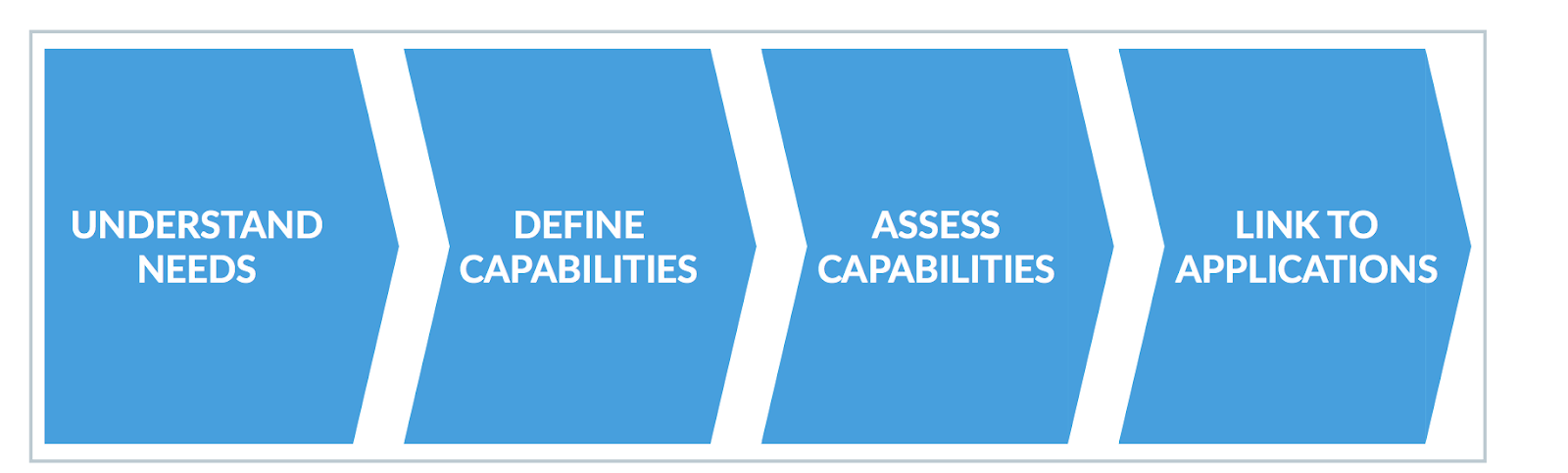
Capability model in Business Analysis Let us first under what is the meaning of capability. Capability: the power or ability to do something. i.e. "he had an intuitive capability of bringing the best out in people" But when it comes to Capability in Business Analysis it gets related to business rater than an individual who is adding an effort. Business capability mapping depicts what a business does to reach its strategic objectives (its capabilities), rather than how it does it (its business processes). Business capabilities are the connection between the business strategy and business execution. According to BABOK Business Capability Analysis is Used to prioritize capability gaps in relation to value and risk Business Capability Analysis is about evaluating the capabilities – A Capabilities is “What a business does and can do” – in the strategic and operational contexts. Business Analysis, on the other hand, is about understanding and analyzing the business contex...

Tableau in Detail

Upcoming topic: Tableau Tableau is a software on business intelligence.

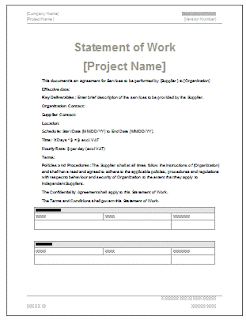
Statement of Work

Image
Statement of Work A Statement of Work (SOW) is a document routinely employed in the field of project management. It defines project-specific activities, deliverables and timelines for a vendor providing services to the client. Overview Various formats & styles of Statement of Work document templates have been specialized for the hardware or software solutions. Many companies create their own customized version of SOWs that are specialized or generalized to accommodate typical requests and proposals they receive. Note that in many cases the Statement of Work is a binding contract. Master Service Agreements or Consultant/Training Service agreements postpone certain work-specific contractual components that are addressed in individual Statements of Work. The Master Services Agreement serves as a master contract governing the terms over potentially multiple SOWs. Sometimes it refers to Scope of work. Know what to include. Bruce Russell, who signed off on numerous SOWs when ...

Feature Driven Development (FDD)

Image
Overview: A quick overview of Feature Driven Development (FDD)—an iterative software development methodology intended for use by large teams working on a project using object-oriented technology. What is FDD? Feature Driven Development (FDD) is an iterative software development methodology intended for use by large teams working on a project using object-oriented technology. The methodology description includes some prescription about what tasks should be done and what roles should be doing them, so many do not consider it a truly agile methodology. Why is FDD useful? FDD is useful because it demonstrates that you can focus on domain modeling on an iterative and incremental project, and because it demonstrates that agile-like methodologies can scale. FDD shows that teams can spend a short amount of time at the beginning of the project to establish a clear understanding of the domain in which they are working and use that understanding to formulate a rough plan without getting st...

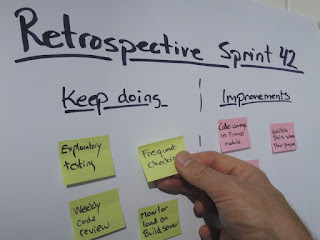
Agile Retrospective

Image
  What is Agile Retrospective ? An Agile retrospective is a meeting that's held at the end of an iteration / sprint in Agile software development (ASD ). During the retrospective, the team reflects on what happened in the iteration and identifies actions for improvement going forward. During the retrospective, each member of the team members answers the following questions: What worked well for us? What did not work well for us? What actions can we take to improve our process going forward? The Agile retrospective can be thought of as a "lessons learned" meeting. The team reflects on how everything went and then decides what changes they want to make in the next iteration / sprint. An atmosphere of honesty and trust is needed in order for every member to feel comfortable sharing their thoughts. Norman Kerth's work at the turn of the millennium was highly important to the development of Agile retrospectives and retrospectives in general. Kerth's prime...