Scrum, Art & The Analyst
As the title says it's not just about analysis or scrum but it also has art in it.
I been thinking to write on this topic for pretty long time, but as the saying goes "There's a right time to do the right thing" and nothing suits better then the time where am elevating a step in my career.
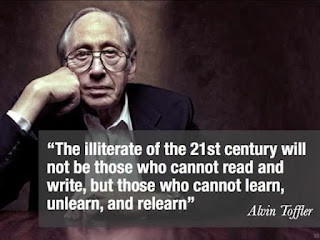
In my experience of working into multiple hats as Scrum master, Business Analayst, Consultant, Customer success and most importantly a project advisor, I have learned a cocept practice in scrum as well as art a very hard way. i.e. Learn, Unlearn and relearn, the concept states you learn a skill with time that evolves in market so you have to step back un-learn the concept but hold onto logic and re-learn the latest evolution in market.
Art goes the same way as no art is same, you can copy a art but it cannot be exact similar to the original one, so says the artist. So, as an analyst i have evolved from .Net, Java to Oracle solutions in my career and I still keep learning my way up. But the point is does this learning ever stops or how do you know that it's time to scale up or wait for re-learn.
The concept lays down in the chronology itself.
Step-1: Learn
Learn when you are new to the domain, skill or organization. As ability to learn makes us better and unique to our lifecycle. As a kid we learn to walk and slowly as we grow older we keep on learning on how to continue with all the health hurdles we face. So learning has been and always will be a most important part of our life. And as it goes there's no age to the learning.
Step-2: Un-learn
They say nothing is easy, especially when you think you are the expert. Being an SME on multiple domains and skills this has been most import skill to absorb, and important to grow with time. But we need to always remember how high we climb equally faster would be the fall. So, when we feel our experience is clouding our judgement and is getting us into trouble un-learn that skill. Unlearn means let it go, and do retro on how it can be evolved? or what's going around us when such situation arises, how other people have evolved? and fortunately we have google and ample of resources to learn from. What can i say we are google generation, "you need it just ask for it!".
Step-3: Re-learn
This is not the easy thing as once we learn something with all our dedication to it, this is toughest to do, reason being at this stage you are the oldie while there are fresh talents who are faster then us to learn the latest evolutions. While we are pass stage-2 of unlearning it takes time for us to absord the stage-3 i.e. re-learn because we have not been attached to the process of learning. Learning needs a dedicated time and resources, but un-fortunately time is the most important part which we have least at this stage considering the position we hold. So, there's a hack, you don't need to learn from 0, you identify the basic difference between what was learned and what needs to be re-learned and that gives us an advantage to cover the ground equally faster. And another way is looking for help from young talents who have recently learned it, there's no harm in asking for help.
I am really thankful to you for reading through this article. But, the best example of this art is our lockdown period of 2020, we learned so many skills, cooking, dancing, etc... we did get bored in beginning but we embraced this work from home culture with time.
So remember, "Best things take time to build, as Rome was not built in a day", while we set our ways apart, I appreciate the valuable time of yours and the time you took to invest in reading this. Happy learning and paced growing.
I been thinking to write on this topic for pretty long time, but as the saying goes "There's a right time to do the right thing" and nothing suits better then the time where am elevating a step in my career.
In my experience of working into multiple hats as Scrum master, Business Analayst, Consultant, Customer success and most importantly a project advisor, I have learned a cocept practice in scrum as well as art a very hard way. i.e. Learn, Unlearn and relearn, the concept states you learn a skill with time that evolves in market so you have to step back un-learn the concept but hold onto logic and re-learn the latest evolution in market.
Art goes the same way as no art is same, you can copy a art but it cannot be exact similar to the original one, so says the artist. So, as an analyst i have evolved from .Net, Java to Oracle solutions in my career and I still keep learning my way up. But the point is does this learning ever stops or how do you know that it's time to scale up or wait for re-learn.
The concept lays down in the chronology itself.

Step-1: Learn
Learn when you are new to the domain, skill or organization. As ability to learn makes us better and unique to our lifecycle. As a kid we learn to walk and slowly as we grow older we keep on learning on how to continue with all the health hurdles we face. So learning has been and always will be a most important part of our life. And as it goes there's no age to the learning.
Step-2: Un-learn
They say nothing is easy, especially when you think you are the expert. Being an SME on multiple domains and skills this has been most import skill to absorb, and important to grow with time. But we need to always remember how high we climb equally faster would be the fall. So, when we feel our experience is clouding our judgement and is getting us into trouble un-learn that skill. Unlearn means let it go, and do retro on how it can be evolved? or what's going around us when such situation arises, how other people have evolved? and fortunately we have google and ample of resources to learn from. What can i say we are google generation, "you need it just ask for it!".
Step-3: Re-learn
This is not the easy thing as once we learn something with all our dedication to it, this is toughest to do, reason being at this stage you are the oldie while there are fresh talents who are faster then us to learn the latest evolutions. While we are pass stage-2 of unlearning it takes time for us to absord the stage-3 i.e. re-learn because we have not been attached to the process of learning. Learning needs a dedicated time and resources, but un-fortunately time is the most important part which we have least at this stage considering the position we hold. So, there's a hack, you don't need to learn from 0, you identify the basic difference between what was learned and what needs to be re-learned and that gives us an advantage to cover the ground equally faster. And another way is looking for help from young talents who have recently learned it, there's no harm in asking for help.
I am really thankful to you for reading through this article. But, the best example of this art is our lockdown period of 2020, we learned so many skills, cooking, dancing, etc... we did get bored in beginning but we embraced this work from home culture with time.
So remember, "Best things take time to build, as Rome was not built in a day", while we set our ways apart, I appreciate the valuable time of yours and the time you took to invest in reading this. Happy learning and paced growing.


The Learn, Unlearn, and Re-learn approach highlights how continuous growth is essential in professional life. The article connects this idea with Scrum, business analysis, consulting, and project advisory experience, showing that learning does not stop after becoming experienced. As technologies, practices, and market expectations evolve, professionals need to remain open to new ways of working.
ReplyDeleteThe Learn stage is about developing knowledge when entering a new domain, skill, or organization. Building a strong foundation and continuously improving those skills helps professionals adapt throughout their careers. For students and developers exploring software and technology areas, Project Ideas for CSE Students can provide practical directions for applying newly acquired technical knowledge.
The Un-learn stage requires stepping back from established assumptions and recognizing when previous experience may no longer be sufficient. Reviewing existing practices, understanding how the industry has evolved, and being willing to let go of outdated approaches can create room for better solutions. Exploring Domains in Computer Engineering can help learners understand the changing areas of technology and identify opportunities for continued development.
ReplyDeleteThe Re-learn stage focuses on adapting existing knowledge to newer technologies and practices rather than starting completely from zero. This mindset is particularly valuable in rapidly changing technical fields, where experienced professionals can combine their existing fundamentals with new skills. Readers looking for practical technology directions can also explore Domains in Computer Engineering to discover different areas for continued learning and growth.
ReplyDelete